Is a Hard Hat Required On a Boom Lift?
Yes – in most cases, you should wear a hard hat when operating or working from a boom lift. UK PPE regulations require employers to provide head protection whenever there’s a risk of injury from falling objects or impact with fixed structures, and these risks are very common on boom lifts.
Why Hard Hats Make Sense On a Boom Lift
Even with guardrails, boom lifts can expose workers to hazards such as:
- Overhead beams, ducting, and steelwork
- Tools or materials being used by others working above
- Unexpected platform movement
- Restricted or tight overhead spaces
The HSE states that hard hats are required whenever there’s a foreseeable risk of head injury, which is true for many MEWP environments.
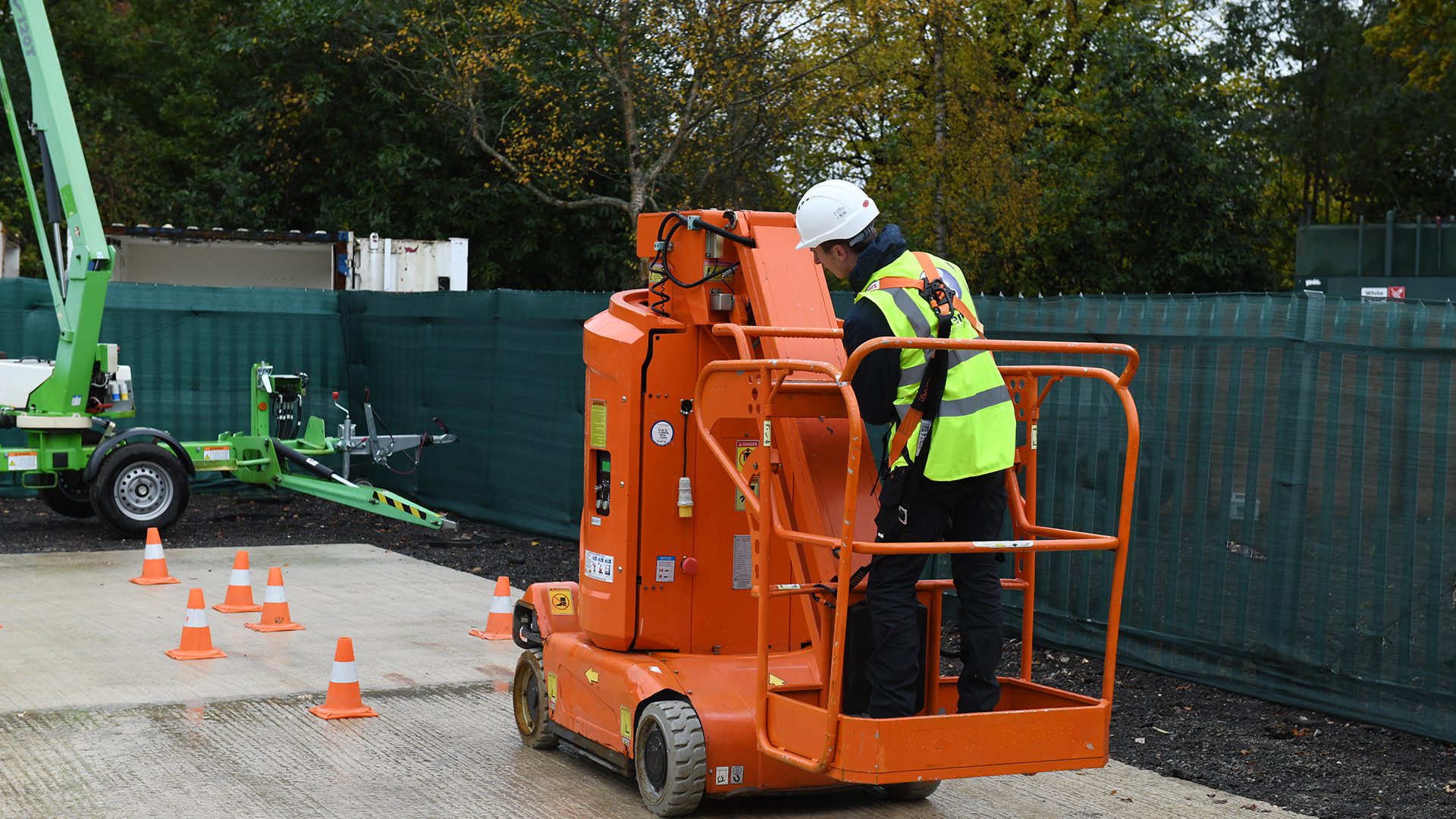
As per the HSE, industrial safety helmets must meet the EN 397 standard, which includes rigorous tests for impact resistance, electrical hazards, and other dangers commonly encountered in construction work.
Are Hard Hats Legally Required on Boom Lifts?
In short: yes, when the risk assessment identifies a hazard.
Under the Personal Protective Equipment at Work Regulations, employers must ensure workers wear suitable head protection where there is a risk of:
- Being struck by falling or flying objects
- Impacting fixed overhead structures
- Other common hazards found when using MEWPs
Because boom lifts frequently operate near ceilings, beams, signage, or active work zones, most risk assessments will deem hard hats necessary.
What Type of Hard Hat Should You Wear?
When working from a boom lift, not just any hard hat will do. You need one that’s designed to protect you from the unique hazards of elevated work – including falling tools, overhead structures, and the risk of your head striking part of the lift.
Here’s what to look for:
1. Choose an Approved Industrial Hard Hat
For work at height, your hard hat must meet recognised UK safety standards – EN 397.
These helmets are tested for:
- Impact resistance
- Penetration protection
- Shock absorption
Chin-strap anchorage (if height-work compliant)
2. Opt for a Chin Strap (Mandatory for Work at Height)
A hard hat must stay on your head when you’re on a boom lift. Look for:
- A four-point chin strap
- Break-strength between 150-250 N (to comply with EN 397)
- A snug, secure fit
Without a chin strap, the hat can easily fall during movement or in the wind, leaving you unprotected.
3. Electrical Protection (If Applicable)
If you’re working near power sources, lines or electrically powered equipment, look for ANSI Class E or EN 397 with electrical protection, as these offer insulation against electric shock.
4. Comfort and Fit
HSE guidelines state that suitable head protection must fit properly, be worn correctly, and be sourced from reputable suppliers.
Therefore, a comfortable hard hat:
- Stays on securely
- Reduces fatigue
- Helps you stay alert at height
Look for one that provides:
- Ventilation (if allowed on your site)
- Adjustable suspension
- Sweatband or moisture-wicking liner
Alongside selecting the right hard hat, it’s equally important to pair your harness with the correct lanyard. We’ve put together a detailed breakdown of the types of lanyards that are acceptable for MEWP use to help you choose the right setup.
What About Bump Caps?
Bump caps are fine for low-risk environments, but they aren’t suitable for boom lifts because they don’t protect against falling objects or significant impact.
Safety regulations make it clear that proper safety helmets or hard hats are required whenever head-injury risks exit, which is almost always the case when using MEWPs.
Where Hard Hats Fit Into MEWP PPE Requirements
Different MEWP types present different risks. Boom lifts, in particular, often require more PPE than scissor lifts due to ejection hazards.
Below is a clear comparison:
| PPE Item | Boom Lift | Scissor Lift |
| Hard Hat | Recommended in most situations due to overhead and falling-object risks | Sometimes required, depending on site risk assessment |
| Harness & Lanyard | Typically required because boom operators face ejection risks | Usually not required unless a specific risk assessment identifies hazards beyond guardrails |
| Chin-Strapped Helmet | Recommended to prevent the helmet from dislodging at height | Optional, depending on movement and overhead hazards |
| Hi-Vis Clothing | Required based on site rules | Required based on site rules |
| Protective Footwear & Gloves | Required based on risk assessment | Required based on risk assessment |
Stay Safe with IPAF Training
Hard Hats are just one part of boom lift safety, but understanding why and when they’re required comes from proper training.
At Star Platforms, we provide IPAF-accredited training, giving you the skills to:
- Operate MEWPs safely and confidently
- Correctly use PPE such as hard hats, harnesses, and lanyards
- Identify site-specific hazards before they become risks
- Understand your legal responsibilitiesunder UK work-at-height regulations
If you or your team work with boom lifts, IPAF training is the best way to stay compliant, reduce risk, and build confidence at height.
Book an IPAF training course online or get in touch with us on 01582 297050 to book over the phone.

Passionate about continuous improvement and risk mitigation, Del works closely with teams to implement robust safety protocols, drive ISO compliance, and champion sustainable practices that align with Star Platforms’ commitment to responsible operations. Whether reviewing incident reports or refining training programs, Del brings precision, accountability, and a proactive mindset to every task.
When not auditing systems or leading toolbox talks, Del shares insights on industry best practices, regulatory updates, and practical safety tips to help customers and colleagues stay informed and protected.
- Do You Need to Wear a Safety Harness On a Boom Lift? - 24 June 2026
- Is a Hard Hat Required On a Boom Lift? - 24 June 2026
- What Types of Lanyard Are Acceptable for Use On a MEWP? - 3 December 2025