Why choose powered access? Real-world benefits over scaffolding for fast, safe work at height
Short summer programmes leave little room for delays. Whether you are refreshing retail displays overnight, turning around a school during half-term, or resetting lighting at an arena, every hour counts. That is where Mobile Elevating Work Platforms (MEWPs) come into their own.
This guide compares powered access with scaffolding for short, mobile tasks, so you can plan faster, safer projects with less disruption. It is written for project managers, FM teams, shopfitters, event crews, utilities planners, and site leads who need practical, confidence-building advice without the jargon.
You will find clear advantages, matched with real examples from common machines and use cases, plus a simple safety plan and a quick checklist to help you choose with confidence.
Powered access versus scaffolding: the core differences
Scaffolding creates a static working area. It excels when you need prolonged access across a large façade or complex, multi-trade staging that will stay in place for days or weeks.
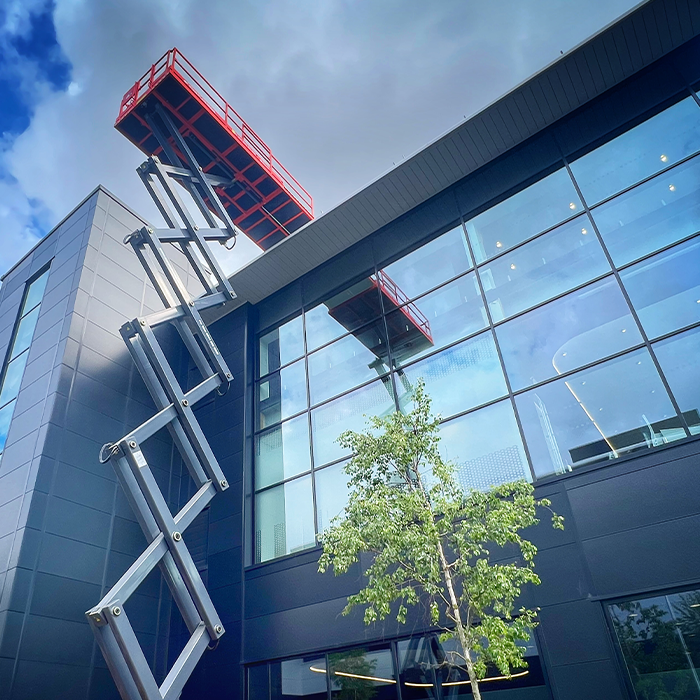
MEWPs are mobile work platforms you can position and reposition in minutes. They are ideal for short-duration tasks, moving quickly between points, and working at height, with built-in guardrails, emergency controls, and modern safety systems. For fast programmes, that mobility typically translates into fewer hours on site and less disruption to building users.
Speed and setup: Why time on tools wins
- Minimal setup: An electric scissor lift, such as the Skyjack 3219, fits through standard doorways, so internal teams can roll from store room to sales floor and elevate within minutes. No time lost building or striking towers between tasks.
- Rapid repositioning: Articulated booms move around obstacles and reach over racking or shopfronts, so you can complete multiple work points without relocating a scaffold bay.
- Short windows, real gains: Events crews can change lighting or banners between rehearsals using compact mast or scissor lifts, keeping aisles clear and noise low.
Example in action: A retail fit-out team swaps seasonal signage across twenty bays. With a doorway-friendly electric scissor, they complete the run in one shift, avoiding the repeated handover and tie-off steps a tower would require.
Mobility and reach, picking the right platform
- Tight interiors: The Skyjack 3219 or micro scissor options handle corridors and lifts, ideal for FM and retail maintenance. Non-marking tyres and quiet electric drive reduce disruption.
- Outdoor ground and gradients: Rough-terrain scissors provide stable platforms for cladding repairs or stadium seating works on uneven surfaces.
- Up and over: An articulated boom offers outreach to work around canopies, plant, or façade features without building complex scaffold ties.
Example in action: A utilities contractor needs to replace luminaires along a riverside path with uneven ground. A rough-terrain scissor gives stable, repeatable access across the run in a day, where scaffold would need multiple builds.
Built-in safety, integrated by design
Modern MEWPs bring engineered safety features as standard. Guardrails, emergency lowering, pothole protection, tilt sensors, and platform controls are designed to keep operators protected when used correctly. Niftylift articulated booms supplied by Star Platforms include SiOPS as standard, which helps reduce the risk of entrapment by responding when the operator is pushed onto the console.
For sites with strict secondary guarding requirements on scissor lifts, solutions such as EQSS OverWatch are available on significant portions of the fleet to add intelligent protection without affecting normal operation.
Example in action: An FM team changes fire alarm sounders in an occupied office. An electric scissor with secondary guarding and non-marking tyres completes the job quietly and cleanly in business hours.

Lower disruption in live environments
- Quieter, cleaner work: Electric and hybrid machines support sensitive sites, from data halls to luxury retail.
- Smaller footprint: No need to cordon off large scaffold zones. Teams can maintain safe exclusion areas that move with the platform.
- Faster exit: When you are done, you are gone. No dismantling or waiting on external trades.
Example in action: An events rigging crew uses a compact vertical mast for truss adjustments at an exhibition centre, finishing between bookings with minimal floor downtime.
Environmental options for indoor and outdoor seasons
Summer refurbishments often cross from interior to exterior. Electric scissor lifts cover indoor tasks with zero emissions at point of use. Hybrid booms, like Niftylift HR models, deliver low noise and reduced emissions outdoors while providing outreach for façades, signage, or canopy work.
Example in action: A construction team switches from indoor snagging on an electric scissor to an articulated hybrid boom for external glazing details the same afternoon.
Safety planning made simple
Good planning and competent operation sit behind every safe MEWP job. Focus on:
- Ground conditions: Verify slab loadings, voids, gradients, and surface type. Use rough-terrain units on uneven ground and keep within rated gradients.
- Machine selection: Match working height, outreach, and dimensions to the task. Keep loads within platform capacity.
- Operator competence: Provide category-appropriate training and familiarisation. Star Platforms delivers IPAF operator courses and can support teams with blended learning and practical assessment.
- Supervision and rescue: Agree clear roles, spotter support where visibility is limited, and an emergency lowering plan.
Most aerial lift accidents are caused by poor planning and human factors, including entrapment or crushing, tip-overs due to ground failure or improper setup, falls from the platform, and contact with overhead power. The right machine, a clear plan, and trained people significantly reduce these risks.
If your teams need to refresh skills, explore MEWP and harness courses alongside practical site briefings:
- See options for MEWP and scissor lift operator courses plus safety harness training via our training pages.
- If you are new to platforms, consider working at height training to build safe habits from day one.
Who benefits in practice?
- Facilities management: Reactive maintenance, lighting, and compliance checks across multiple rooms with a single compact scissor.
- Retail: Overnight resets and seasonal changes with doorway-friendly electrics that glide through aisles.
- Events: Rigging, banners, and AV tweaks between sessions using vertical masts or compact booms.
- Utilities and telecoms: Outreach over obstacles for columns, signage, and cabling with articulated booms.
- Construction and refurbishment: Internal snagging on electric scissors, external details with hybrid or diesel booms, and outdoor slab work on rough-terrain scissors.
Quick planning checklist
- Define task points, working heights, and any up-and-over needs.
- Check access widths, doorway sizes, lifts, and turning spaces.
- Confirm floor loadings and ground conditions, including gradients.
- Choose power type, electric or hybrid for low-noise, low-emission work.
- Allocate trained operators and a competent supervisor or spotter.
- Plan exclusion zones, traffic routes, and emergency lowering.
- Book early, then re-check site conditions on the day.
You can get an instant ballpark using the quick-quote tool, or speak with our team for impartial machine selection if you want a second opinion before you lock in.
FAQ
- What are the advantages of powered access platforms?
Quicker setup, easy repositioning, integrated safety systems, lower disruption in live spaces, and a choice of electric or hybrid machines for sensitive sites.
- What are examples of access equipment?
Electric scissor lifts such as the Skyjack 3219 for interiors, rough-terrain scissor lifts for outdoors, compact vertical masts for tight aisles, and articulated booms for outreach over obstacles.
- What is the difference between scaffolding and a MEWP? Scaffolding is a static structure assembled around the work area. A MEWP is a mobile, powered platform you can position in minutes, ideal for short, moving tasks.
- Who uses access equipment?
FM teams, shopfitters, electricians, HVAC installers, events and rigging crews, utilities and telecoms engineers, and construction and refurbishment contractors.
- What are most aerial lift accidents caused by?
Typically, due to poor planning and human factors, including entrapment, tip-overs on unstable or unsuitable ground, falls, and power line contact.
Gentle next step
If you are planning summer refurb or fit-out work, shortlist the platform type first, then confirm site constraints and training. For guidance, explore powered access equipment on our site and, when you are ready, use the quick-quote tool or speak to our team for impartial advice on the right MEWP for your job.
Internal resources that may help:
- Browse powered access equipment and solutions at Star Platforms.
- Find MEWP and scissor lift training, including IPAF-led options and safety harness training, on our training pages.
- Review electric scissor lift hire for quiet, clean indoor tasks.

We focus on clear, accurate, and engaging storytelling that reflects our commitment to innovation, customer service, and responsible digital practices. All content published under this name adheres to our editorial standards and compliance guidelines, ensuring consistency, credibility, and relevance for our audience.
- Star Platforms Backs Local Fundraisers in the Fight Against MND - 21 October 2026
- Star Platforms Invests in Specialist Low-Level Access Equipment for Data Centre Projects - 30 September 2026
- Who Needs IPAF 3A and 3B Training for MEWPs in the UK - 27 August 2026